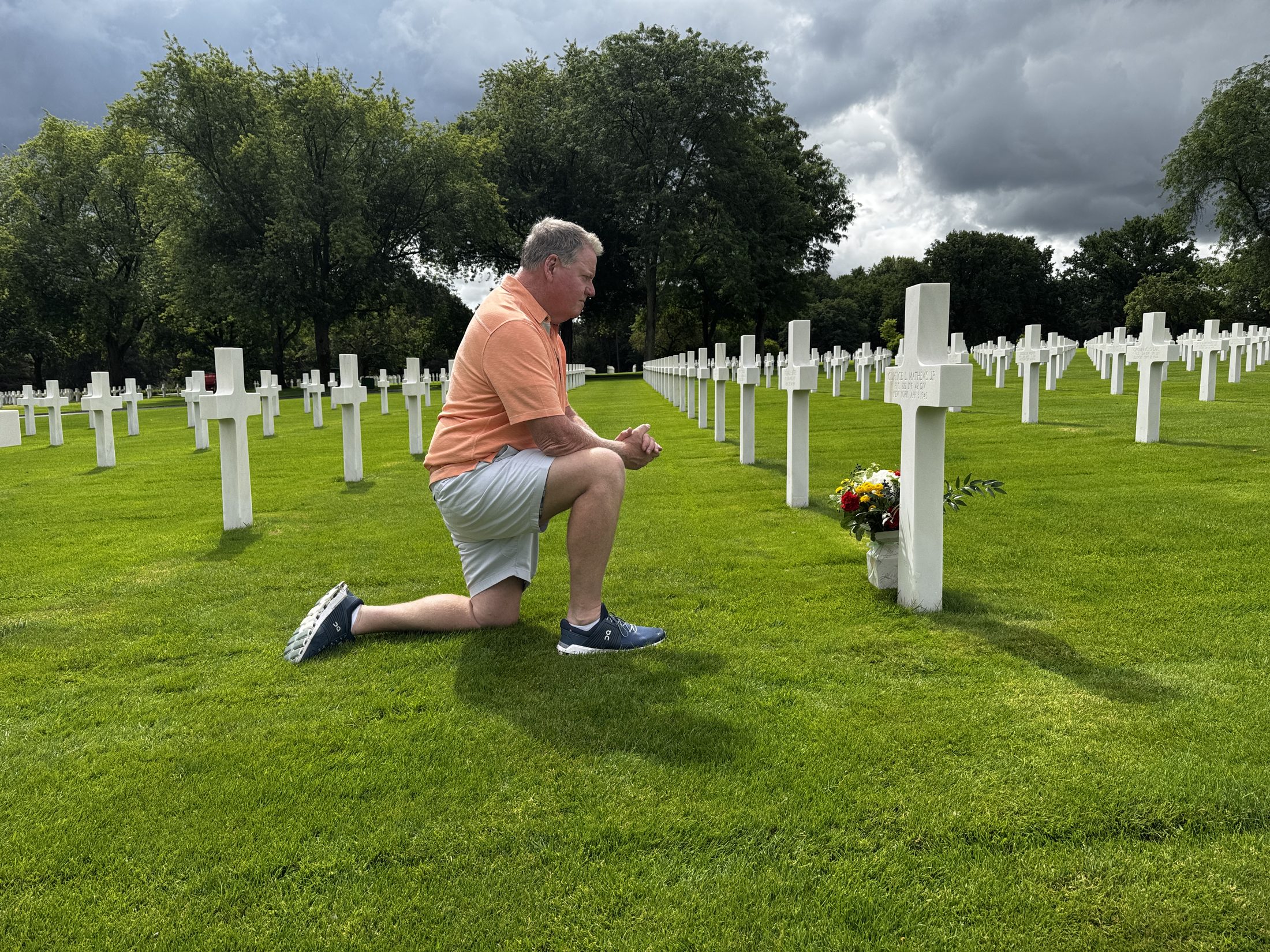
Tom Breen visits the grave of his father’s best friend, PFC Curtice L. Mathews, killed in action in Germany.
Tom Breen visits the grave of his father’s best friend, PFC Curtice L. Mathews, killed in action in Germany.
The Rainbow Trail is scattered across France, Germany, and Austria, with thousands of deeply personal stories preserved and held in my archive. No one place holds the whole story. I find the pieces and places that belong exclusively to your soldier, and take you to experience them. You’ll walk where he walked, through battlefields, billets, and foxholes.
Every tour is curated from the official record, the pieces I have gathered over a decade, and the story your family carries.
The work

What the tour is
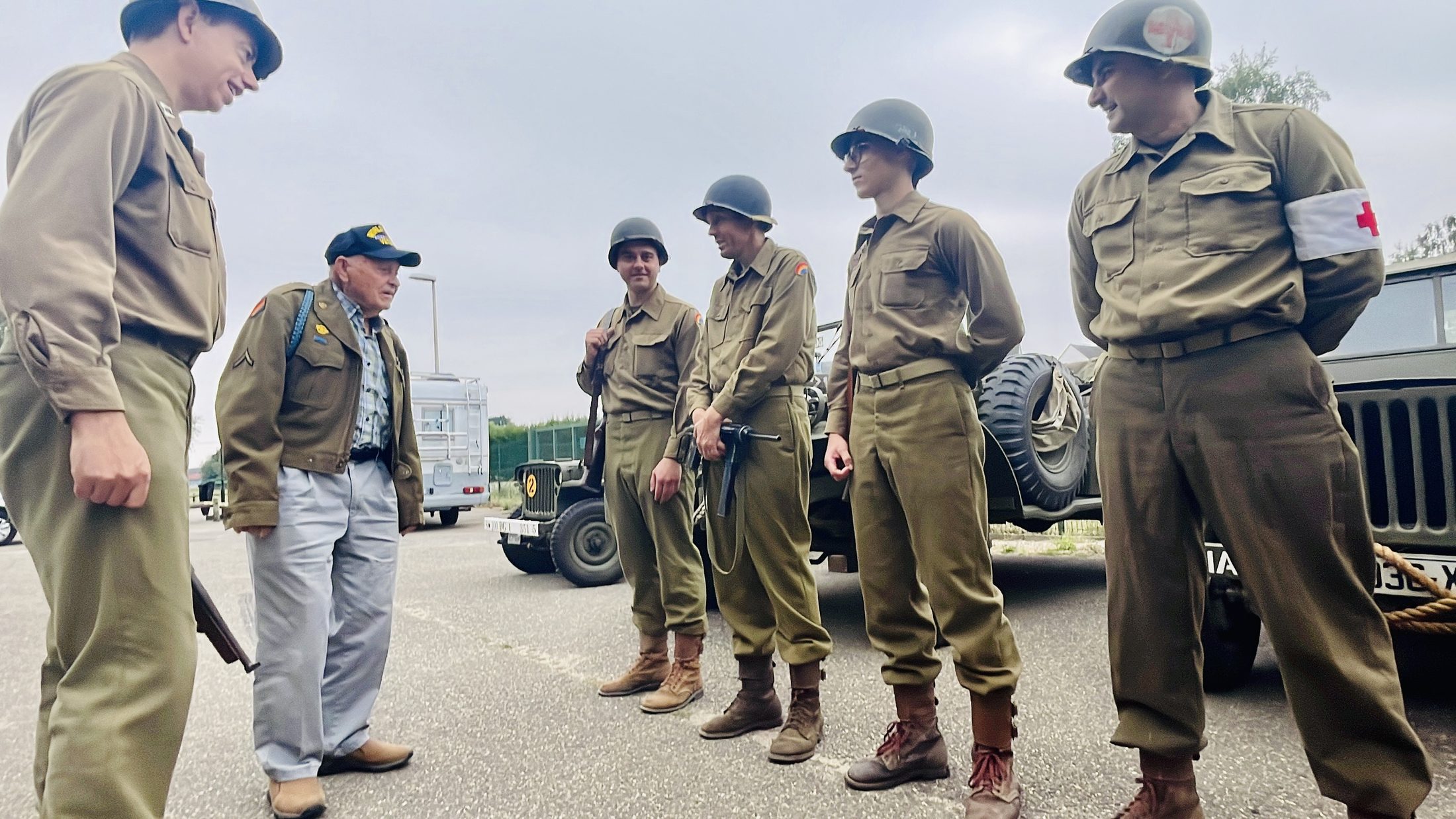
We follow one soldier across the ground he actually walked. Working from his service record and your family's account, I reconstruct where he stood and what was happening around him. We go where he went, to the crossroads and the cellar, the riverbank and the ruined street, until those places hold his memory again. My work is not focused on tactics and strategy. It is focused on the experience of the man, and what the war was really like for him.
The collection holds documents, photographs, letters, and oral histories contributed by veterans, their families, fellow historians, and official repositories across two continents. This is the foundation of my devotion to your family's story, and it travels with us, informing every step we take on the ground.
Over years of walking this ground I have built trusted relationships with locals who each hold their own piece of this legacy, from the families in Alsace whose grandparents lived through it all, to the staff at the sites still dedicated to history. They help us tell the stories where the stories happened.
The foundation is heart and devotion, a combing of the archive until your personal legacy comes to light. By the end of the tour, the families I work with always understand that I care as much as they do, through the attention to detail, the emotion your soldier's story brings forth, and the experiences your family will never forget.
The line
These are the major stops along the Trail. We will find your soldier’s specific placement in these cities and all the places in between, and give his story the time it deserves.
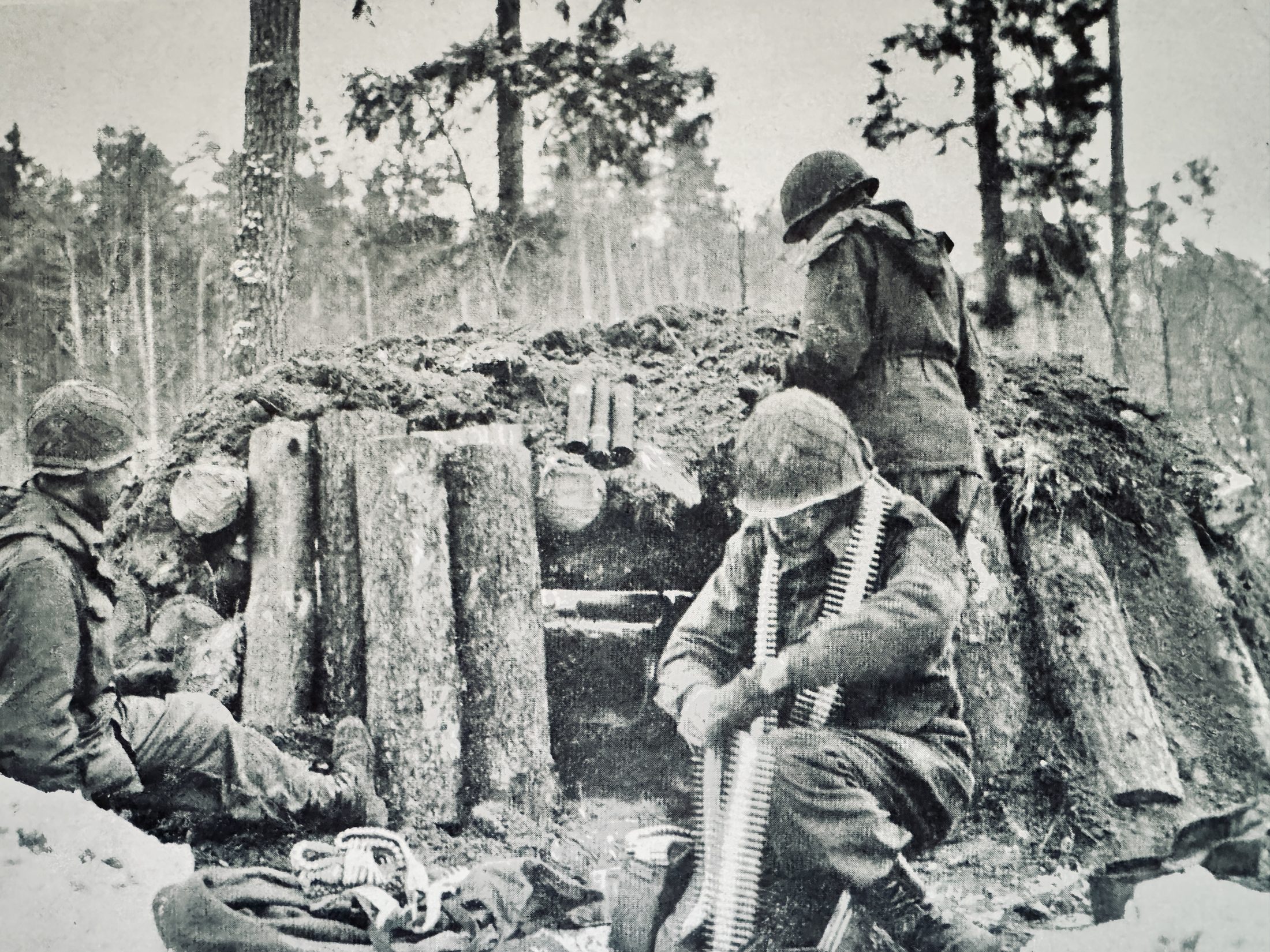
They arrived at Christmas and were in combat before the new year. Operation Nordwind drove a German assault into Alsace, and thousands of green Rainbow soldiers held the front. For families of the 222nd, 232nd, and 242nd Infantry Regiments, this is where the story begins.
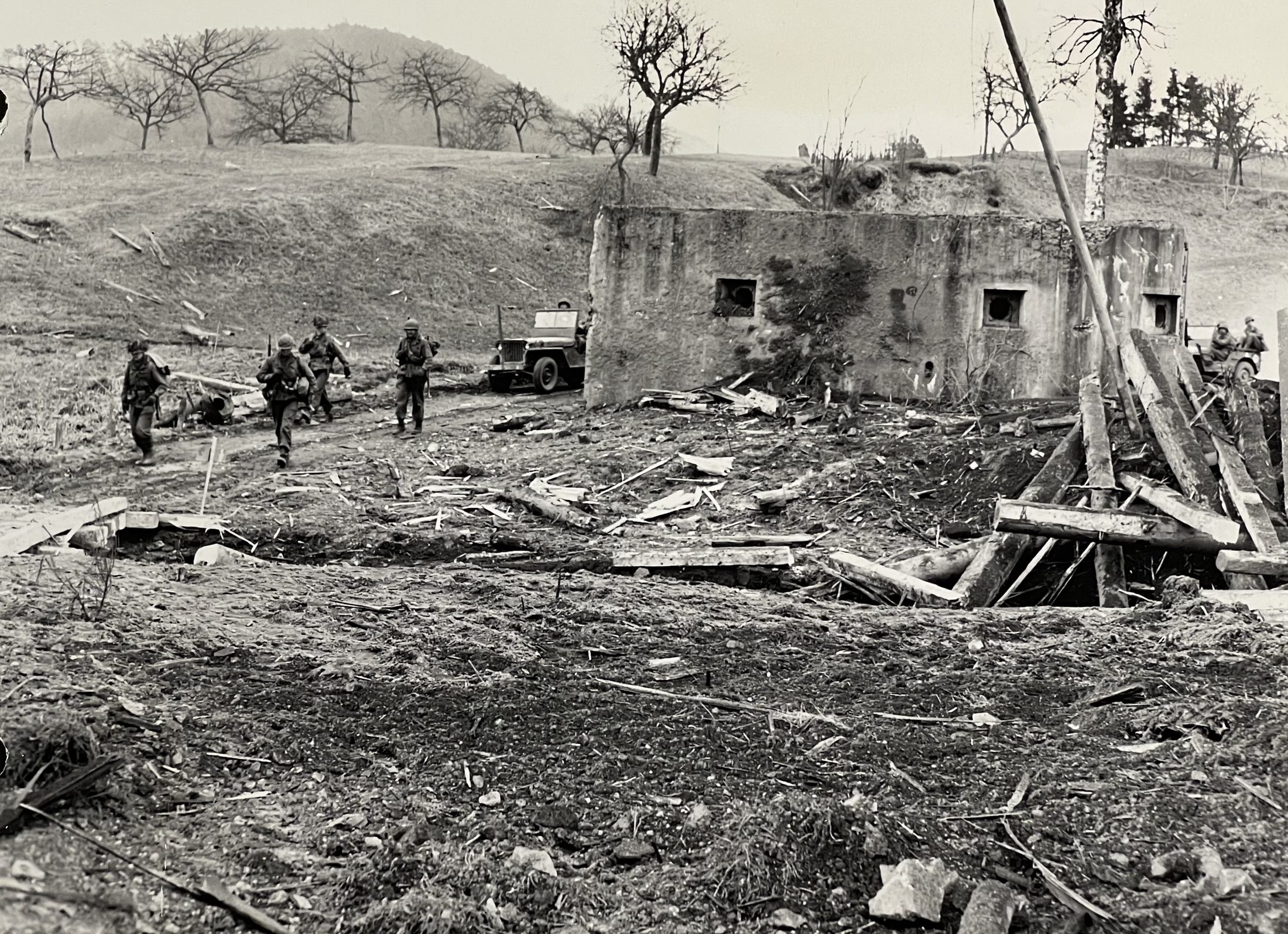
Through February and March the full division pushed through the Hardt Mountains, breached the Siegfried Line the Germans had believed impassable, and crossed the Rhine.
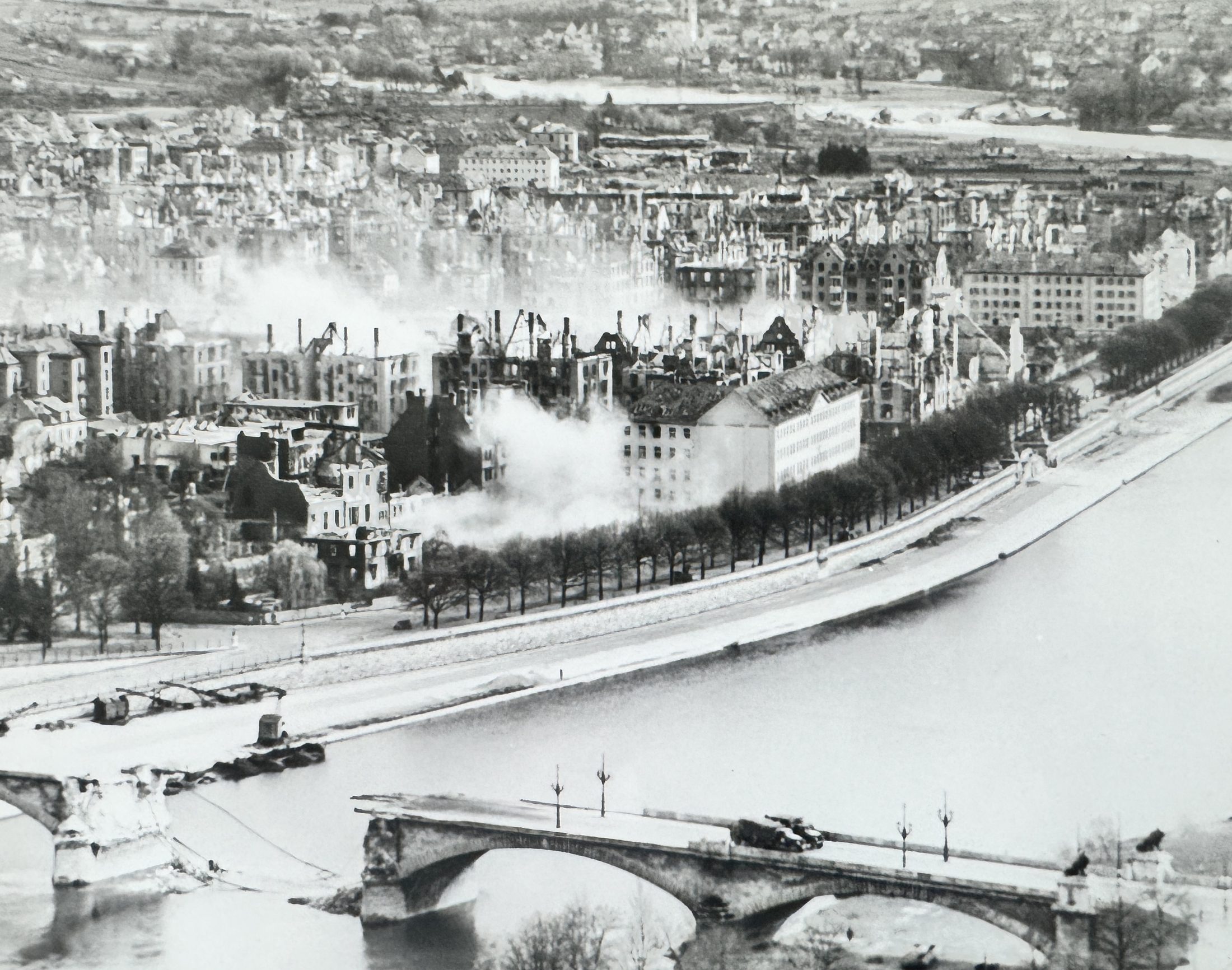
Würzburg fell in four days of street fighting, the Germans tunneling back through cleared ground to force the Rainbow to take the same buildings twice. Then Schweinfurt, Fürth, and Nuremberg.
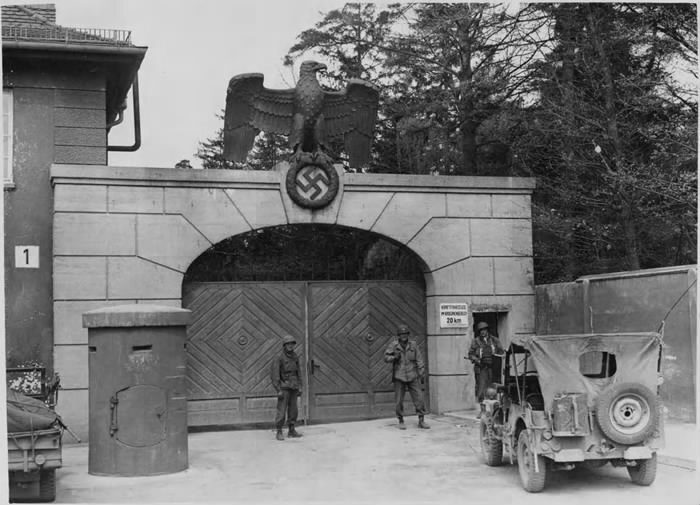
The same day they captured Munich, the Rainbow reached Dachau. The soldiers left a vast amount of personal recollection, photographs, and documentation that we bring with us to this somber place.
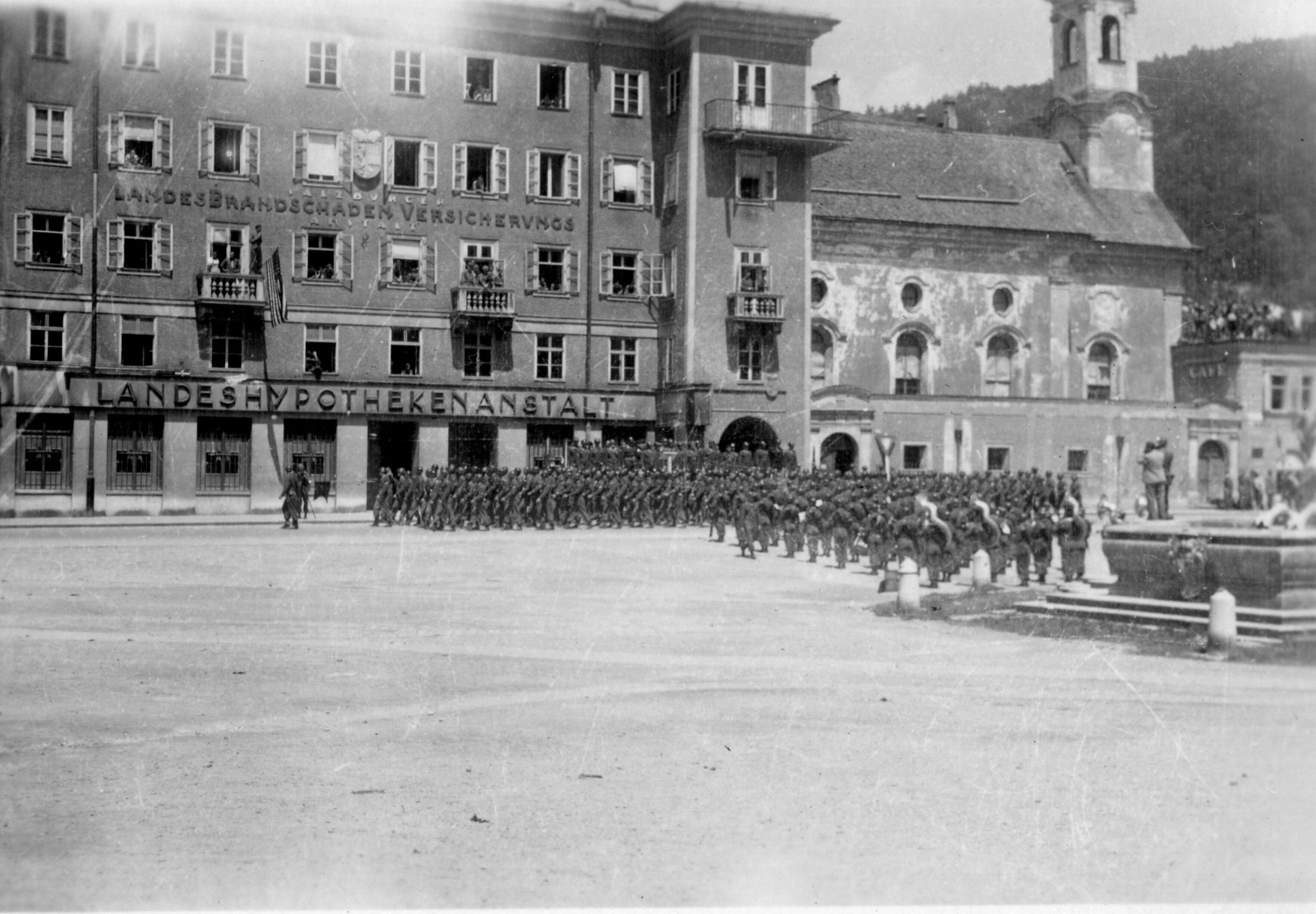
By early May, Rainbow patrols had crossed into Austria. Many soldiers stayed here for another year, restoring order and settling into post-war life.
On the ground
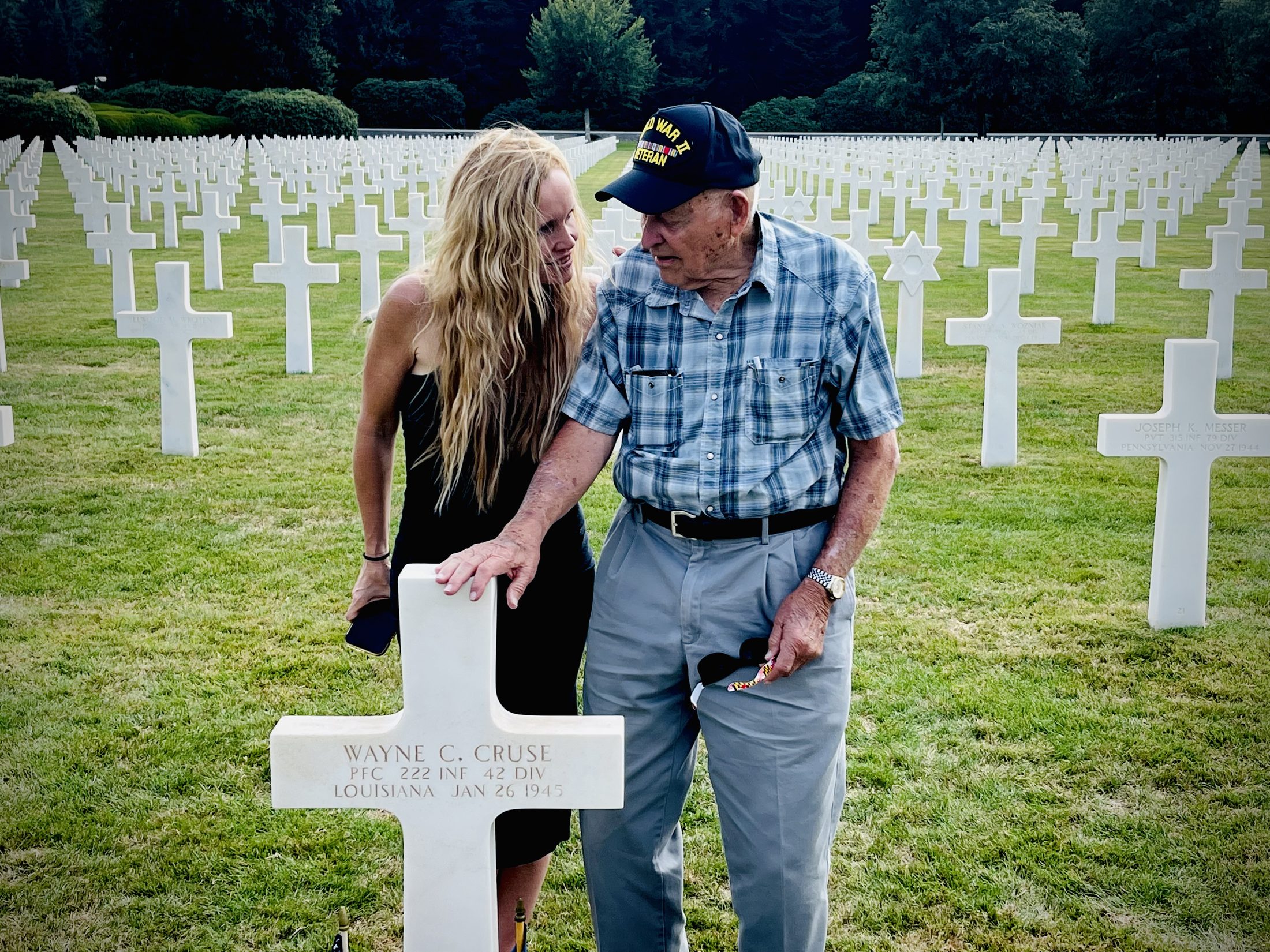
With Bud Gahs at the grave of his friend PFC Wayne C. Cruse, Épinal American Cemetery.
Why walk it with me
It began at the gates of Dachau in 2015, and it has taken me into the living rooms of multiple Rainbow veterans and hundreds of their families. I’ve traveled back and forth across Europe, walking the same villages, woods, and river crossings the Rainbow crossed, with documents in hand.
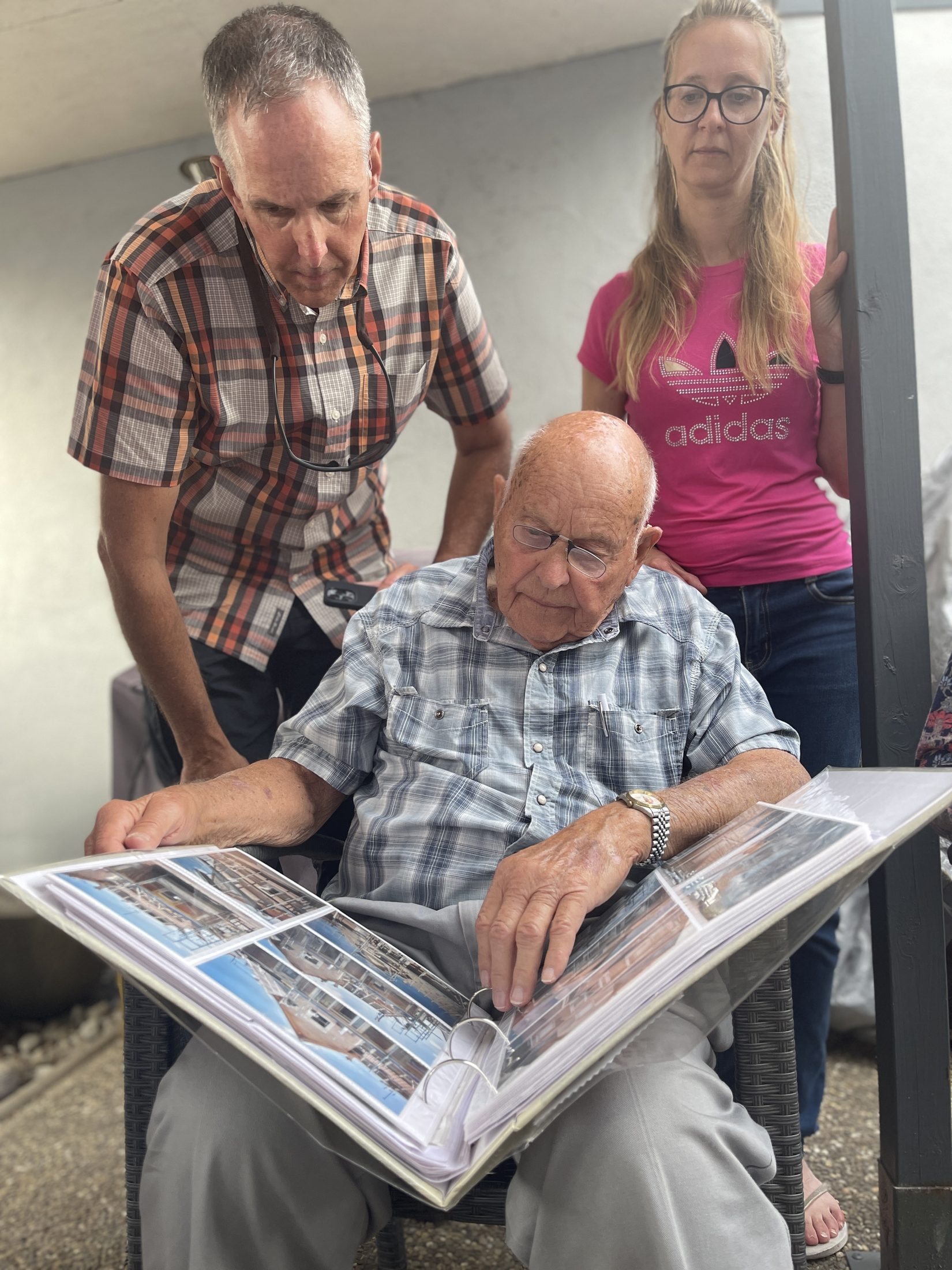
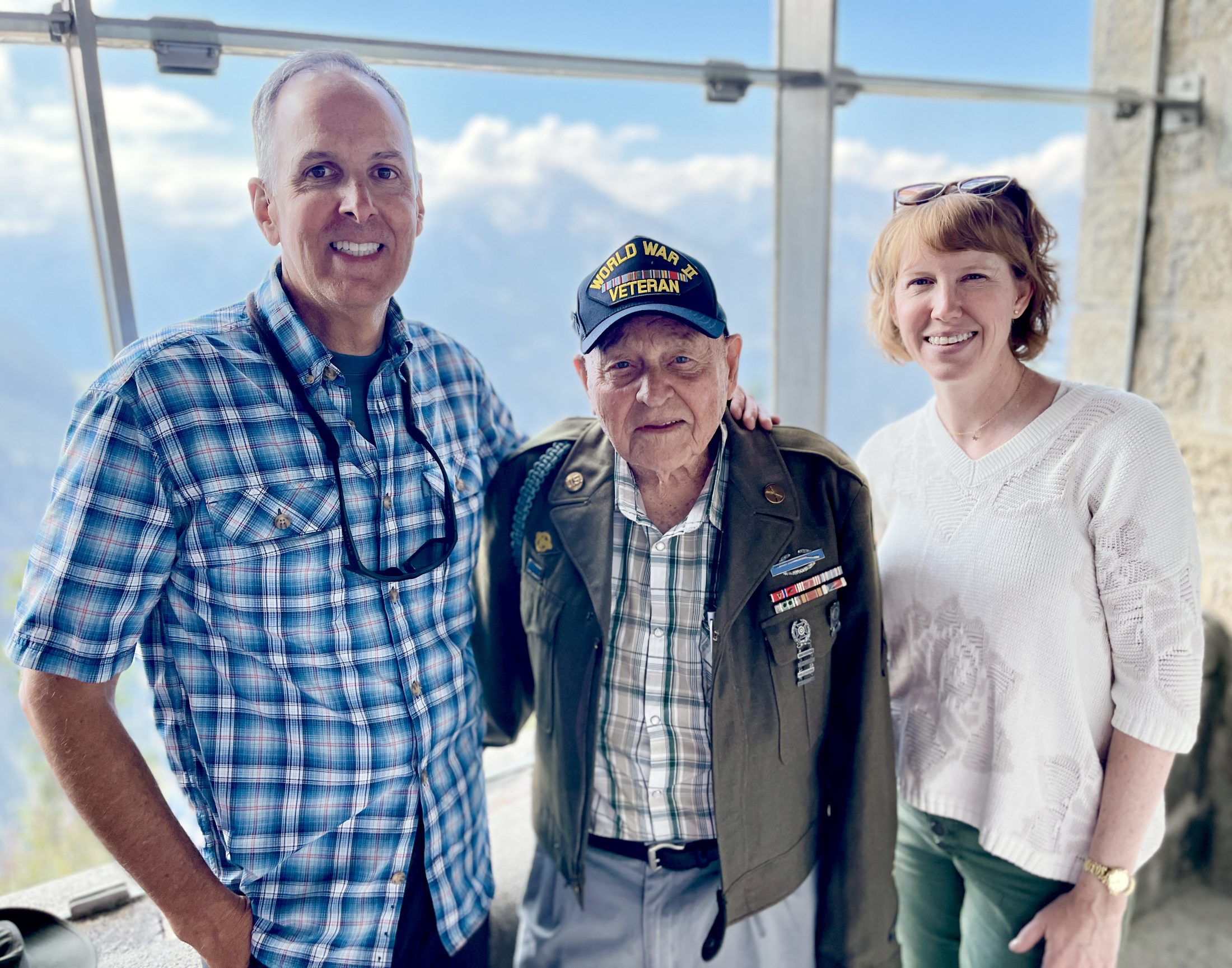
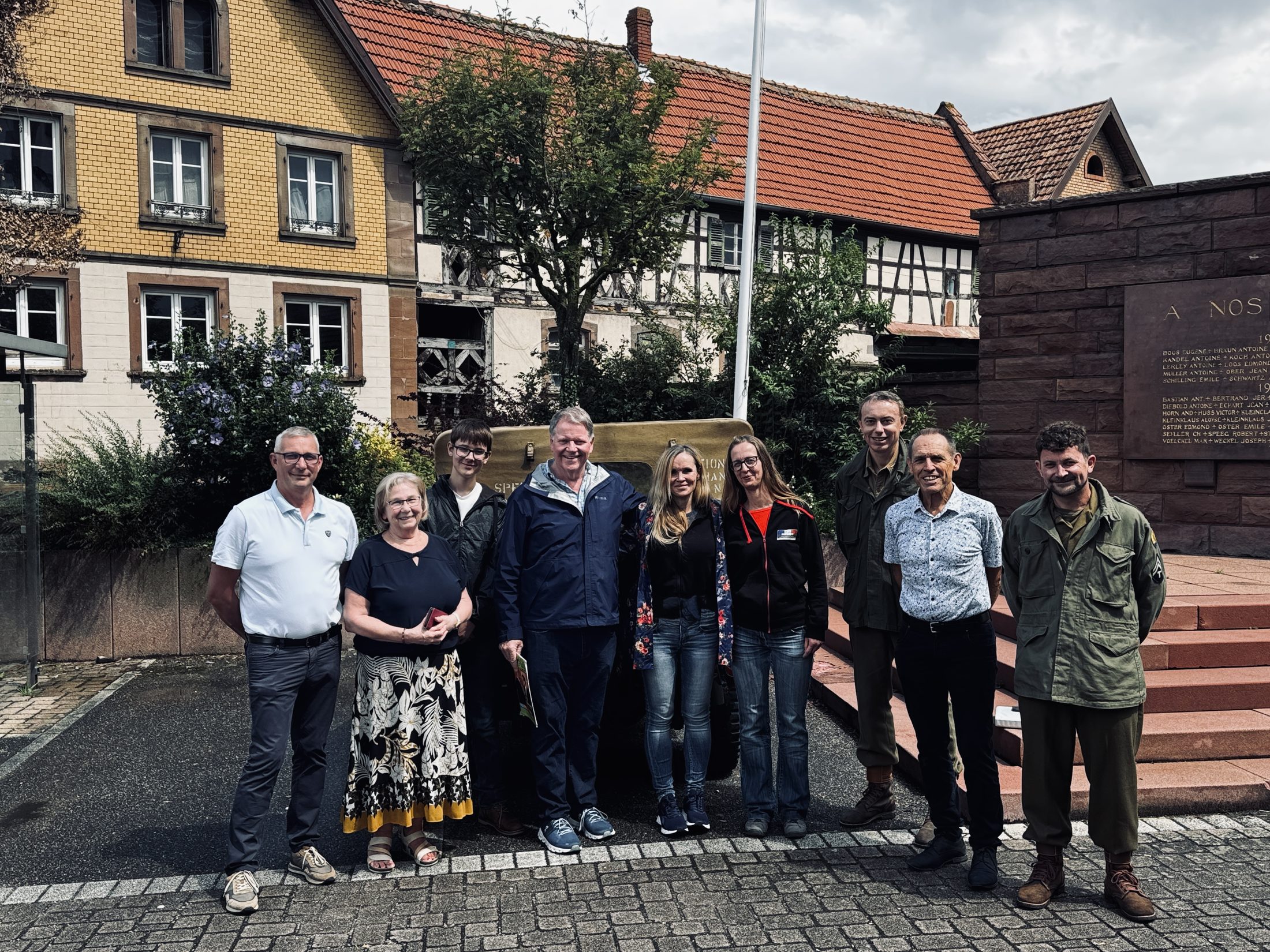
I’ve walked the Trail twice with Lockered “Bud” Gahs and his family, a Rainbow veteran and a dear friend, finding the house in Schweighouse-sur-Moder where Bud held his position for hours during Operation Nordwind, and made contact with the family who lives there now. They took Bud in like one of their own, and the bond between them has only deepened since. With my network of trusted colleagues in France, we surprised him with an elaborate ceremony in the courtyard of the very house he had fought in, where he was given the Legion of Honor, seventy-seven years after he fought there. I wrote about that day here. Bringing Bud back was covered across the French and American press.
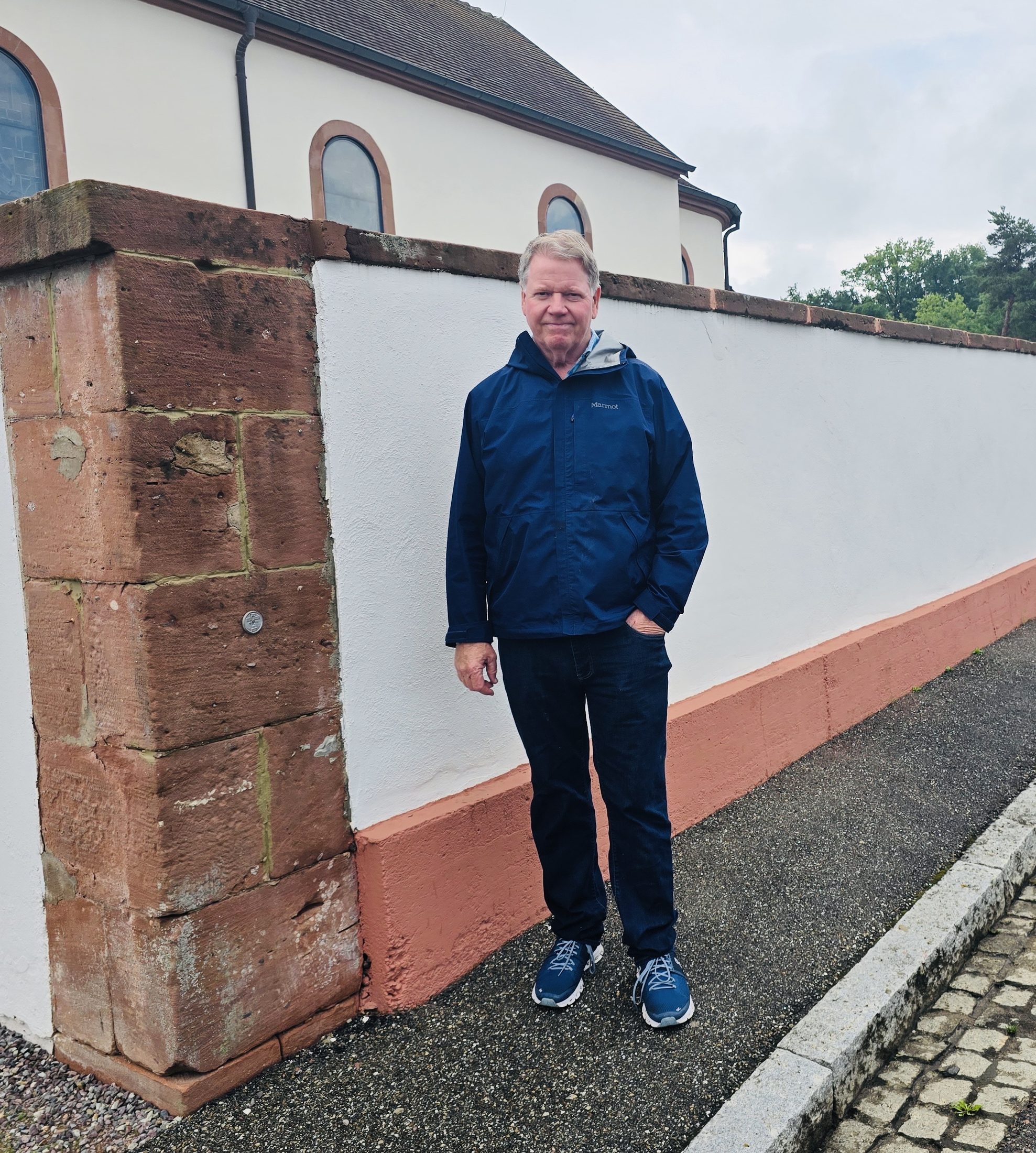
Tom Breen grew up hearing about a wall. His father ran past it, in the thick of a fierce artillery barrage, while on a mission for his company commander. An 88 shell flew right past him and exploded into the wall beside him. Because the wall was plaster, he was not peppered with shrapnel and was not wounded or killed. Cross-referencing the details of Tom’s father’s story against a collection of first-hand testimonies and unit reports, I found the exact wall, and took Tom to stand in front of it. Tom’s tour was featured in the Daily Herald and in Alsace’s DNA.
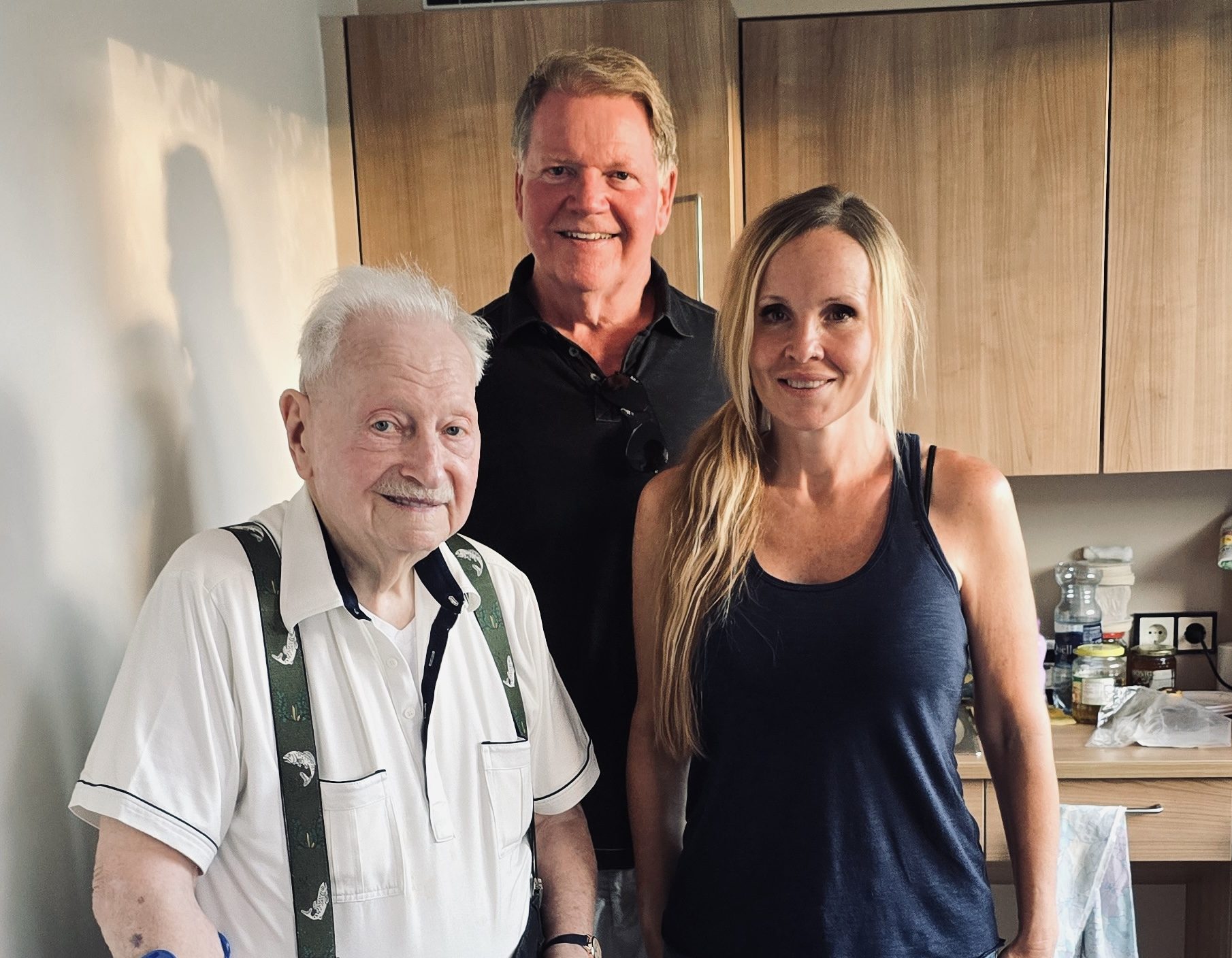
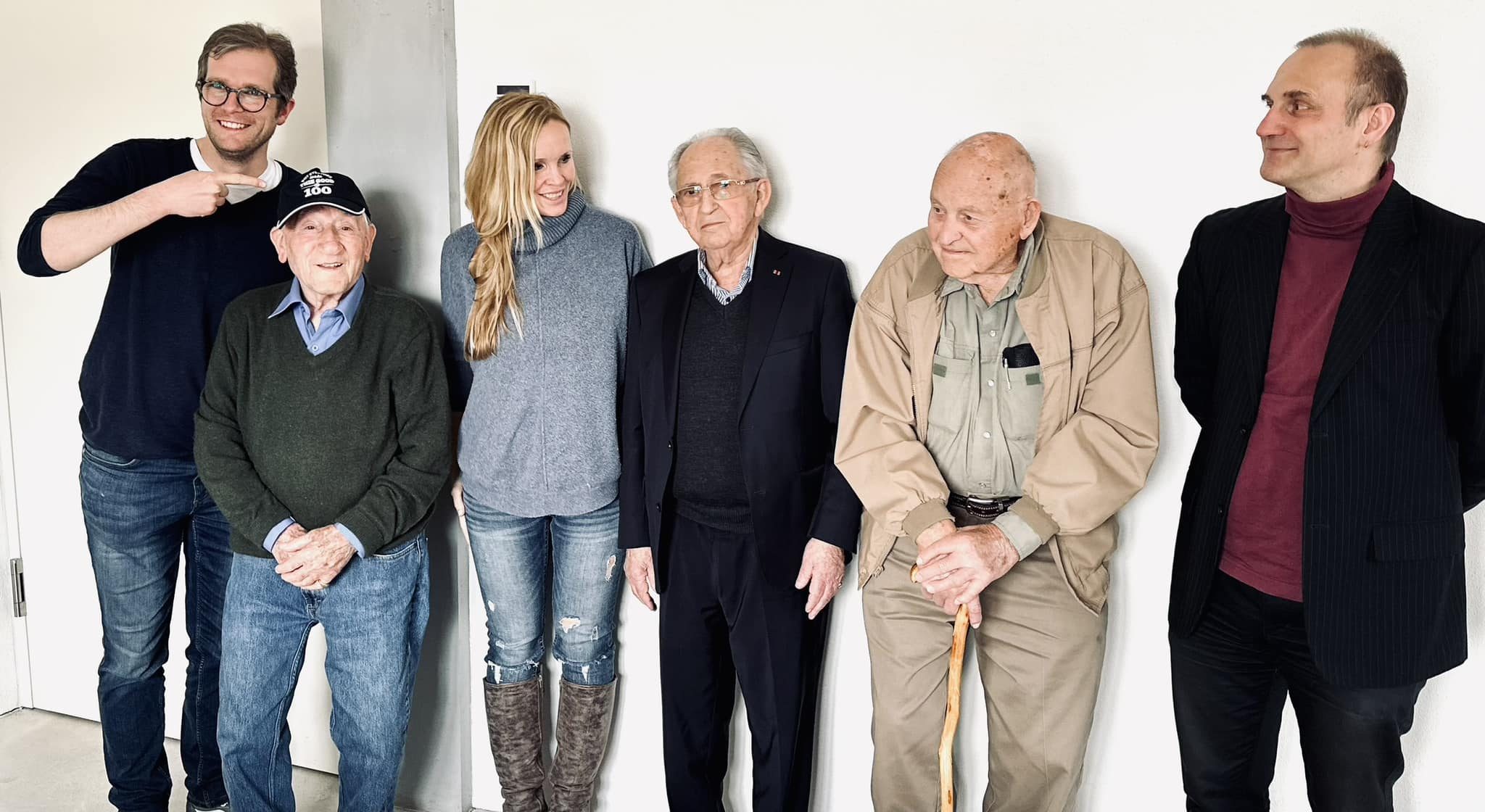
“It is because of men like your father,” he said, “that I am alive.” Erich Finsches had tears in his eyes as he clasped Tom’s hand in both of his and thanked him with great sincerity. There is nothing like bringing the son of a Dachau liberator to meet one of its survivors, and watching the gratitude that passes between them. With the help of my friend and colleague Max from the Dachau Memorial, we visited Erich’s home in Austria, where he has lived a long and successful life since the end of the war.
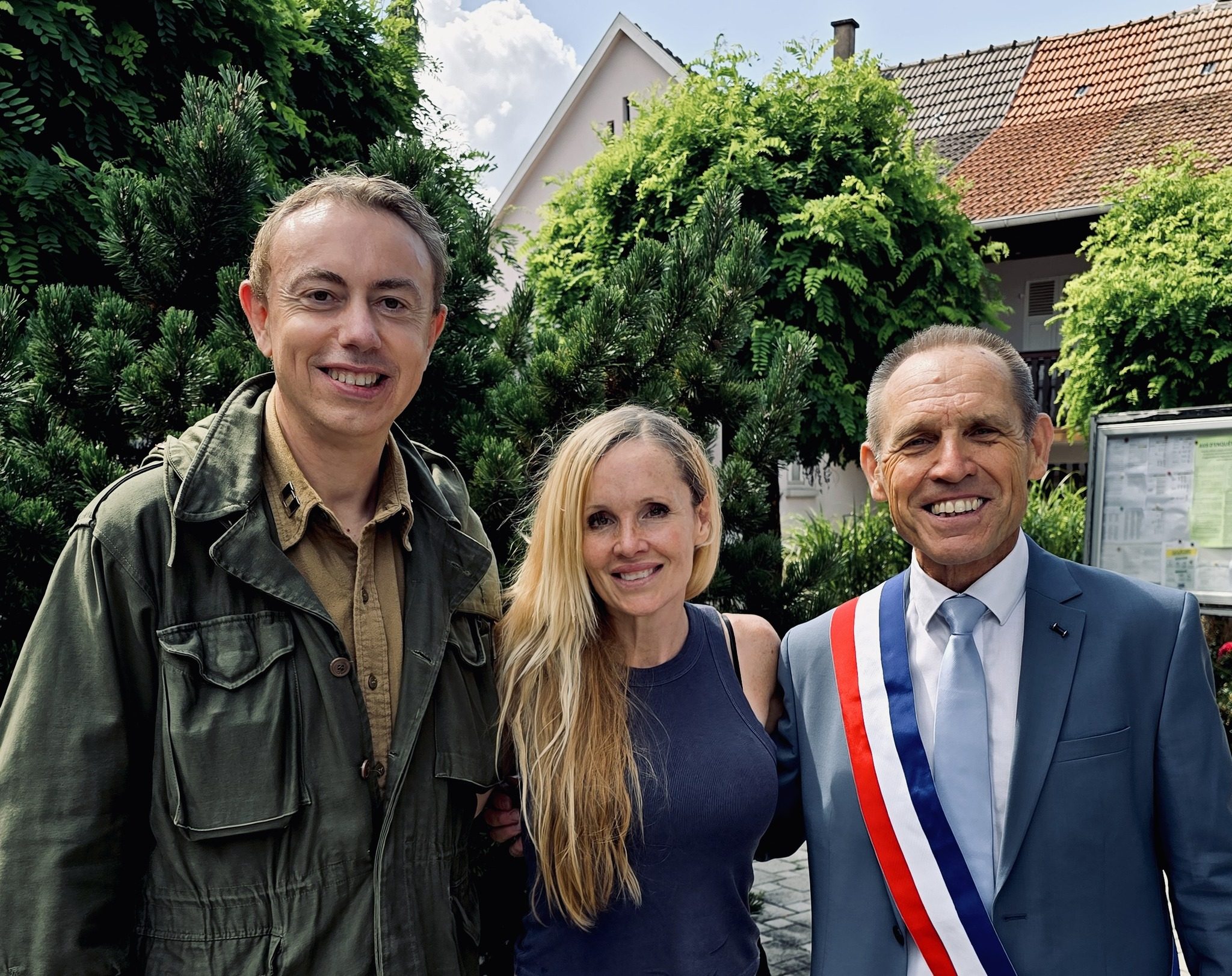
A tour is only as deep as the people who carry its memory. In Alsace that has meant working beside historian Materne Schaerlinger and Mayor Claude Bébon, who hold this history in their own region and meet us where it happened. I wrote about that friendship here.
Endorsement
Erin’s untiring drive to uncover the details surrounding the units, the battles fought, and the brave men who bore the heavy burden of securing freedom for generations to come is remarkable.
Brigadier General (Ret.) Gary S. Yaple · Chairman, Rainbow Division Veterans Foundation, 2023–2025
On the ground
Short pieces from the field, filmed where the history happened.
From the writing
A few of the stories from this work, each one a full piece on my site.
 In Vienna with Max and Erich
 Walking in His Father’s Footsteps
 In the Footsteps of the 222nd Infantry
 Returning to Europe with Bud Gahs
From a family who walked it
Erin brings history to life with accuracy, care, and great respect for those who served. Her ability to research and interpret military records, including morning reports, provided context and detail that I would not have been able to uncover on my own. What makes Erin truly exceptional, however, are the trusted relationships
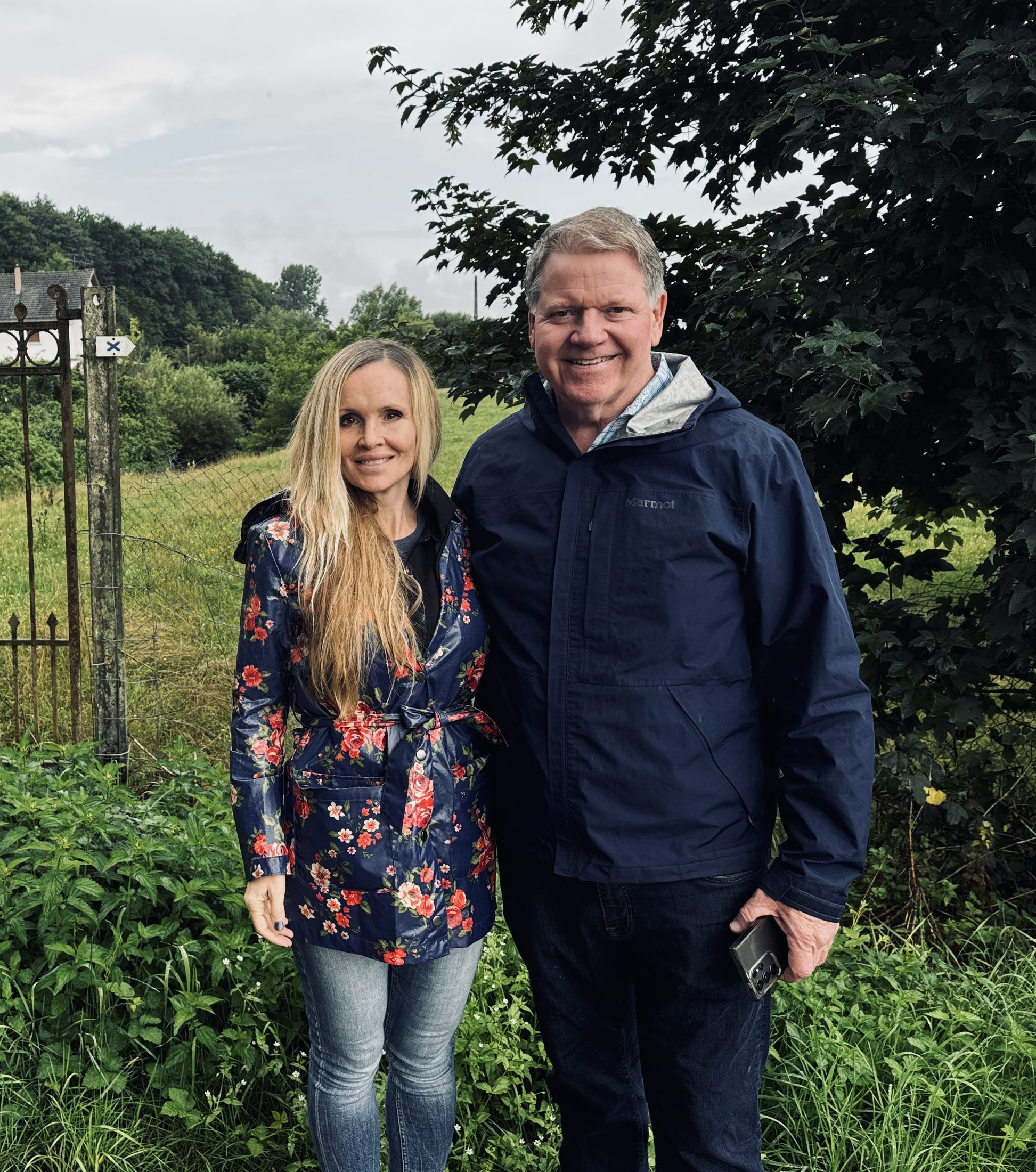
she has built over the years with other historians, archivists, and local experts both in the United States and across Europe. Because of these connections, doors were opened for us to experience special opportunities that would have otherwise been impossible. I cannot recommend Erin highly enough.
Tom Breen · Son of Vernon C. Breen, 222nd Infantry Regiment, 42nd Rainbow Division
What’s involved
Planned around your soldier’s personal story, spanning 7–10 days.
Private, built for a single family.
Months of archival reconstruction, so the ground is ready to reveal itself before you walk it.
The Rainbow Trail itself, curated personal locations, and the European historians and locals who meet us there.
Everything on the ground is handled by me, from planning and logistics to lodging, so your only task is to be present.
One or two, by private inquiry.
Before you ask
It is a private tour built around a single soldier of the 42nd “Rainbow” Infantry Division. I reconstruct his path from the records, then walk it with your family on the ground, from Alsace to Austria, through the battlefields, billets, and foxholes he knew. One family at a time, never a bus and a crowd.
Yes, and most families start exactly there. A name, a unit, a single photograph, sometimes only the knowledge that he served in the 42nd, is enough for me to begin. The reconstruction is mine to do. I go into the records and bring his war back, and then we walk it together. You do not need to arrive knowing the history. You will leave holding it.
From the record, cross-referenced. I work from his service file, the morning reports, the after-action reports, and the unit journals, and I hold that military documentation against the first-hand accounts, photographs, and personal papers I keep in my archive, thousands of them, from men across the whole division, along with whatever your family carries. I follow it until the ground and the archive agree. When I take you to a wall, a hill, or a river crossing, it is because the documents put him there.
From Alsace to Austria. The 42nd entered combat in Alsace during Operation Nordwind in the winter of 1945 and fought across France and Germany to Dachau, which it reached on the day of its liberation, and on into Austria. The full path, unit by unit, is laid out on my 42nd Rainbow Division page.
Anyone who served in the 42nd “Rainbow” Division. The infantry of the 222nd, 232nd, and 242nd, and every bit as much the field artillery, the combat engineers, the medics, the signal and reconnaissance men, and the special troops who carried the division forward. Whatever your soldier’s unit, I can follow his path. Sons, daughters, and grandchildren who grew up hearing pieces of a story and want to stand where it happened, with the full history in hand.
I accept only one or two families a year, so each one has my full presence, and everything on the ground is arranged by me. To begin, reach out and tell me whose footsteps we are following.
I take only one or two families each year, so each receives my full presence. If yours is one of them, it would be an honor to begin.
Researched, written, and led by Erin Faith Allen · Fortitude Research